
Best of the Best - Championship Karate story
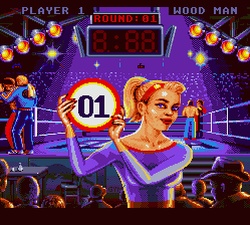
The story of Best of the Best—the one with Championship Karate beaming from the cover—started long before SNES carts hit shelves. In France, at Loriciels, someone pitched not another carnival brawler with fireballs, but a disciplined martial arts sim where timing, distance, and stamina call the shots. That road began with Panza Kick Boxing and led to a sequel that found a new gear on 16‑bit hardware—tighter, sterner, more mature. The box read Best of the Best: Championship Karate, a title that cues you up for a champions’ bracket with zero fluff.
From Panza to Best of the Best
The team kept that “realistic ring” idea and mapped it to a pad: less fireworks, more footwork. Panza already had you feeling those thudding body shots and cautious half‑steps; here, the philosophy goes all in. Before you touch the ropes, you train—sharpen accuracy and power, dial in your pace. That’s how Best of the Best sits between worlds: a SNES fighter and a martial arts sim where every movement has a price. The naming reflected that too: some insisted on “Championship Karate,” others cut it to “Best of the Best,” while old‑school club veterans winked—basically “Panza Kick Boxing 2,” now on a cartridge with new priorities.
In the early ’90s, realism like that was rare. Arcades were stacked with crowd‑pleasers, but the French school of design held its ground: no magic, just close‑ to mid‑range work, breath control, and a strike delivered with discipline. Coaches loved it, kids in gi loved it, and so did anyone who wanted to actually feel the weight of a hit on screen. Not a heap of effects—just the ring’s lean honesty. That’s why Best of the Best still earns respect.
How it landed in our hands
On SNES, Electro Brain brought it to American shelves, while Loriciels held the fort in Europe. Then the ’90s did their thing: suitcases full of carts, flea‑market stalls, stickers with borrowed box art, and labels scrawled by hand. Some copies shouted Best of the Best, others simply read “Championship Karate,” and among diehards you’d hear the full “Best of the Best: Championship Karate.” Pirate and gray waves rolled in, clubs built rental catalogs, and on the “16‑bit fighters” shelf this one always sat apart—no bombast, but bags of character.
In some neighborhoods it became the SNES karate game: no screamy super moves, just stubborn sparring where wins are earned, not accidental. So the local legends wrote themselves: “beat the champ after a week of drills,” “took two rounds on a single strike,” “clutched it when stamina was at zero.” A homegrown mythology formed—tiny gyms on screen, the sweaty rasp of pixel fighters, a short victory fanfare, and that feeling you really ground through a champions’ ladder instead of speedrunning a roster.
Why it stuck
Loving Best of the Best isn’t blind nostalgia—it’s respect for the craft. The game lays out the deal: want the belt, do the work. Pre‑fight training isn’t window dressing; it sets your rhythm, teaches timing and guard, and helps you place shots where defense is soft—body, head, legs. That’s the foundation of the emotion: you step in not as a comic‑book superhero, but as an athlete who remembers every drill rep. That’s why folks called it a “martial arts simulator” on a cart—and why it slots so naturally into the 16‑bit hall of fame.
Across Russia and neighboring countries it quietly built its crowd. Not every shop stocked a SNES aisle, but where Best of the Best appeared, it rarely got traded back—the discipline and that “honest ring” vibe stuck. Clubs argued: some chased flashier fighters, others chose the old school—sweaty palms on the pad and that cherished “realism without fireballs.” Years later, when someone boots the cart again, you remember not just the title, but all the local nicknames—“Championship Karate,” “Best of the Best,” even “Panza 2.”
It scored another quiet win: it taught you to value the small stuff. That tiny beat before a punch, the micro side‑step, the stamina budget—the little things big sport is built on. That’s the mark Best of the Best left on SNES: proof a fighter can be not only flashy, but disciplined, restrained, and full of backbone. When the screen fades, you’re left with a warm memory of how you, even in pixels, survived your little final and raised your own small champion’s belt.
That’s how a cult formed—never massive, never noisy, but stubborn and loyal. Say “karate on SNES” or “old‑school fighter without magic,” and that logo and the hush before the bell pop right back in. Best of the Best earns its name not with volume, but with honest grind. And that’s why we still return to the ring—to check our timing, find our range, and remind ourselves there’s always a way if you hold your stance and don’t rush.